 1099 Login

Browse our latest posts
-

What Is Intelligent Document Capture? Definition, Capabilities, and Key Differences from OCR
Organizations that process documents at volume spend significant staff time on work that produces no output: sorting incoming mail, keying data from paper into systems, correcting entry errors after the fact. Intelligent document capture (also referred to as automated document capture) eliminates that work. It uses Optical Character Recognition (OCR), Intelligent Character Recognition (ICR), machine…
-
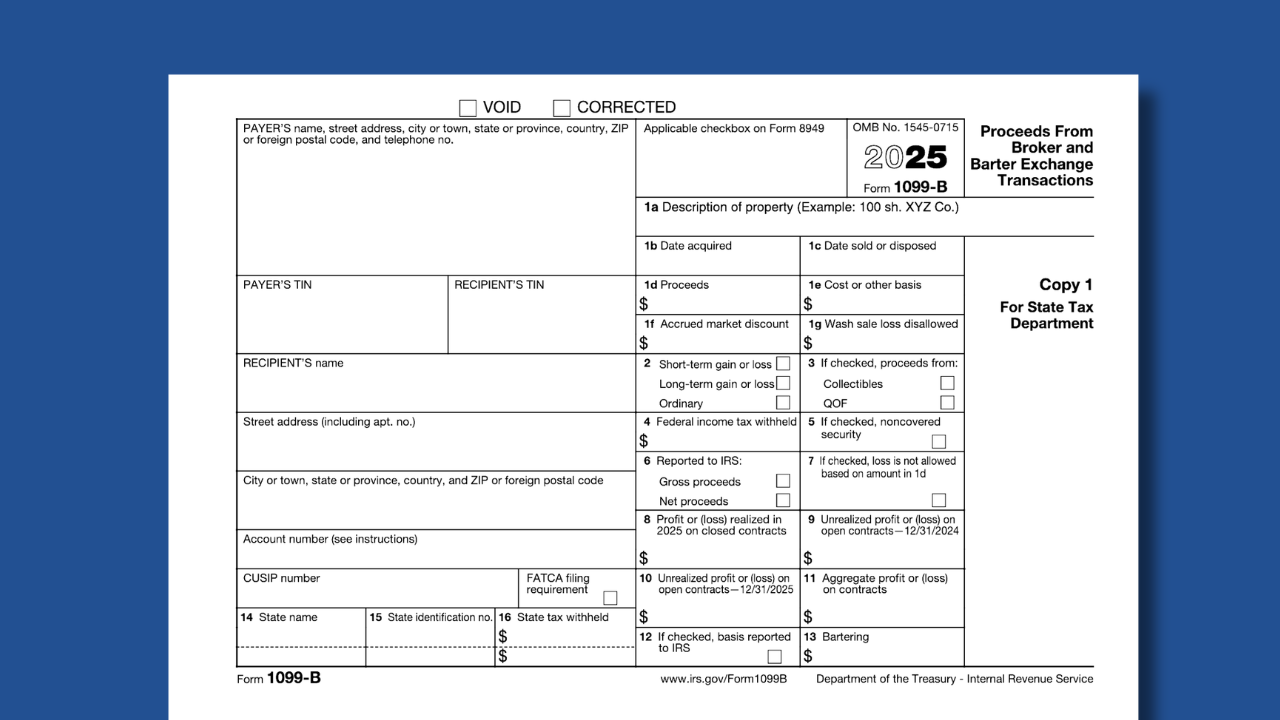
What Is Form 1099-B? Broker and Barter Exchange Reporting Explained
Form 1099-B, Proceeds From Broker and Barter Exchange Transactions, is the IRS information return that brokers and barter exchanges use to report the proceeds from a customer’s securities sales and other reportable transactions, including regulated futures and Section 1256 option contracts handled through a broker. Investors who sold stocks, bonds, mutual funds, options, or other…
-
Key Facts About IRS Form 1099
“Form 1099” is a family of information returns, each covering a different type of payment, with different thresholds, different deadlines, and different rules. Here’s the current picture, current as of the 2026 tax year. Form 1099 Variants Each variant reports a different payment type. For example: Filing the wrong variant for a payment type is…
-
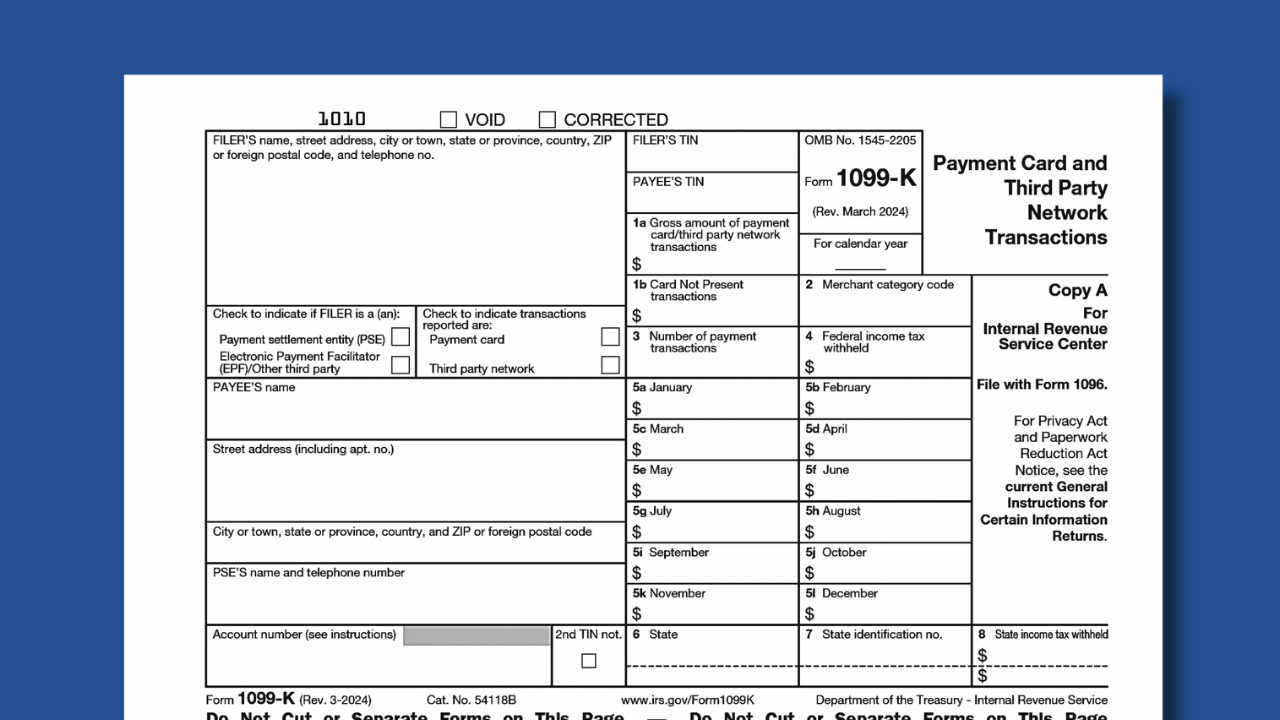
Form 1099-K Reporting Requirements for 2026
If you’ve read that PayPal, Venmo, and similar platforms would begin issuing 1099-Ks for payments over $600 in 2026, that’s no longer accurate. The One Big Beautiful Bill Act (OBBBA), signed July 4, 2025, reinstated the original thresholds: $20,000 and 200 transactions. (IRS — IR-2025-107) This article covers the rules as they stand today. What…
-

Second B-Notice Requirements: What to Send, Who Gets It, and What Happens Next
A second B-notice is not a repeat of the first. It triggers a different process, different requirements for your payee, and different rules around backup withholding. Getting the details wrong — especially sending a W-9 when you shouldn’t — doesn’t resolve the mismatch and can leave you exposed to IRS penalties. This page covers who…
-
How New Technology Has Transformed Bulk Scanning Efficiency
Organizations managing large volumes of paper records face two distinct challenges when digitizing: capturing documents quickly and accurately, and processing them into organized, retrievable files. Modern bulk document scanning technology has advanced significantly on both fronts. According to PwC, automating document processing saves organizations 30–40% of the hours previously spent on manual handling — gains…
-

Backfile Conversion and Document Archiving: How to Digitize Years of Paper Records
Document archiving is the full lifecycle of managing inactive records: identifying what needs to be kept, digitizing paper documents, indexing them for retrieval, storing them securely, and disposing of them according to retention schedules. Backfile conversion is the critical first step in that lifecycle for any organization still holding years of paper. It converts the…
-

Paper Survey vs. Online Survey: How to Choose the Right Format for Your Research
Choosing between a paper survey and an online survey is one of the most consequential decisions in research design, yet it’s often made on instinct rather than methodology. The format you choose affects who responds, how honestly they respond, and whether your results accurately represent the population you intend to study. This guide walks through…
-

Going Paperless in Financial Services: What It Takes and Where to Start
This post covers what drives the paperless transition in financial services, where the compliance requirements sit, and what a practical approach looks like for organizations that haven’t yet fully made the shift. Why Financial Services Organizations Are Moving Away from Paper The business case for reducing paper in financial services is well established. Physical records…


