 1099 Login

Browse our latest posts
-

What Is MICR? How Magnetic Ink Character Recognition Works on Checks
If you’ve ever looked at the bottom of a check and wondered what those numbers mean, or why they have to be printed with special ink, you’re not alone. MICR (Magnetic Ink Character Recognition) is one of the most durable standards in American banking. Understanding it matters if your organization prints, mails, or processes checks…
-

In-House vs Outsourced Invoice Mailing: How the Cost Structure Differs
Businesses that mail paper invoices choose between printing and mailing in-house, or using a third-party invoice printing and mailing service. The choice affects staff time, postage cost, error rates, and invoice delivery speed, and the two models spend money in structurally different ways. Labor cost In-house The U.S. Bureau of Labor Statistics reports a median…
-

The Complete Guide to Going Paperless: Benefits, Tools, and How to Make the Transition
The paperless office has been “just around the corner” since The Office of the Future, published in Business Week on June 30, 1975, predicted that computers would soon eliminate paper from the workplace entirely. More than fifty years later, most offices are still printing, filing, and hunting for misplaced documents. That’s not necessarily a failure…
-

2026 Form 1099-NEC and 1099-MISC: New Boxes for Tips and Overtime
Forms 1099-NEC and 1099-MISC include new boxes for tax year 2026. The changes are driven by the No Tax on Tips and No Tax on Overtime provisions of the One Big Beautiful Bill Act (OBBBA), which allow eligible recipients to deduct qualified tips and overtime compensation. To support those deductions, payers are required to separately…
-

IRS 1099 Form Changes for 2026: What’s Different and What You Need to Do
The 2026 tax year includes significant changes to 1099 reporting, affecting which vendors require forms, what data those forms must capture, and how returns are submitted to the IRS electronically. This guide covers what changed, which organizations are affected, and what steps to take before January 2027 filing season. Looking for 2025 form changes? Those…
-

How to Calculate the True Cost of In-House Statement Printing and Mailing
If you’re evaluating whether to outsource your transactional print and mail, an accurate baseline is the necessary first step. Ask most operations managers what it costs to print and mail their monthly statements and they’ll cite paper, toner, and postage. Staff time, sometimes. But those figures typically leave out a significant share of the actual…
-

Print and Mail Data Security and Compliance: SOC 2, HIPAA, GLBA, and FERPA
Outsourcing transactional print and mail means handing a third party the same sensitive data you’d otherwise protect behind your own walls: protected health information, financial account data, personally identifiable information. Whatever compliance obligations apply to your organization extend to any vendor who touches that data. This post covers what verified, audited print and mail data…
-

The Complete Guide to Outsourcing Transactional Print & Mail
This guide covers what transactional mail outsourcing involves, when it makes financial sense, and what to look for in a provider. What is transactional mail? Transactional mail is the category of physical documents that exist because of a business transaction or legal obligation. Think: What separates transactional mail from direct mail marketing is that it…
-
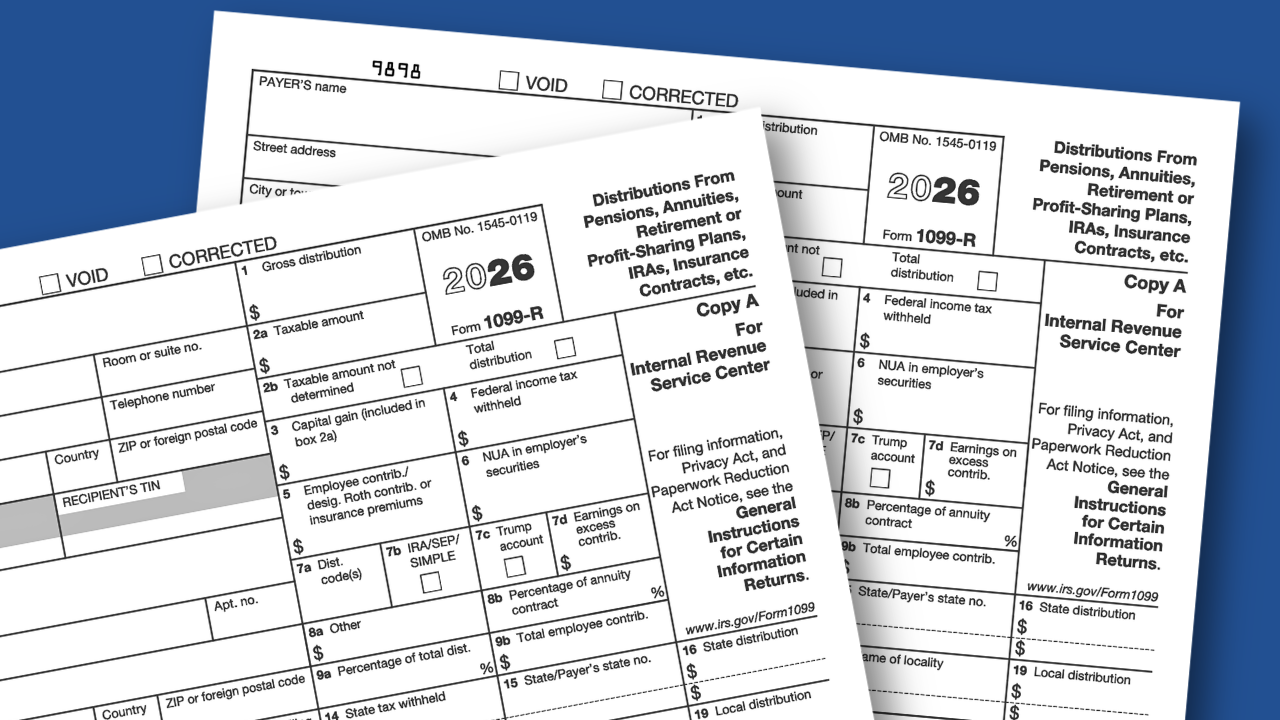
Form 1099-R Distribution Codes, Boxes, and E-Filing: Complete Guide for 2026
Changes to Form 1099-R in 2026: Distribution Code Y, New Reporting Boxes, and IRIS The 2026 Form 1099-R introduces the most significant structural changes to the form in years: Code Y for Qualified Charitable Distributions remains optional for a second consecutive year, the distribution code field has been renumbered to box 7a alongside three new…


