 1099 Login

Browse our latest posts
-

How to Calculate the True Cost of In-House Statement Printing and Mailing
If you’re evaluating whether to outsource your transactional print and mail, an accurate baseline is the necessary first step. Ask most operations managers what it costs to print and mail their monthly statements and they’ll cite paper, toner, and postage. Staff time, sometimes. But those figures typically leave out a significant share of the actual…
-

Print and Mail Data Security and Compliance: SOC 2, HIPAA, GLBA, and FERPA
Outsourcing transactional print and mail means handing a third party the same sensitive data you’d otherwise protect behind your own walls: protected health information, financial account data, personally identifiable information. Whatever compliance obligations apply to your organization extend to any vendor who touches that data. This post covers what verified, audited print and mail data…
-

The Complete Guide to Outsourcing Transactional Print & Mail
This guide covers what transactional mail outsourcing involves, when it makes financial sense, and what to look for in a provider. What is transactional mail? Transactional mail is the category of physical documents that exist because of a business transaction or legal obligation. Think: What separates transactional mail from direct mail marketing is that it…
-

IRS FIRE System Retirement 2026: Understanding the Transition to IRIS
The IRS has announced the retirement of its FIRE (Filing Information Returns Electronically) system; a filing platform that has served taxpayers for over four decades. As of mid-July 2026, the Tax Year 2025 filing season is well behind us, and organizations are in the final stretch before FIRE shuts down. FIRE and IRIS are both…
-
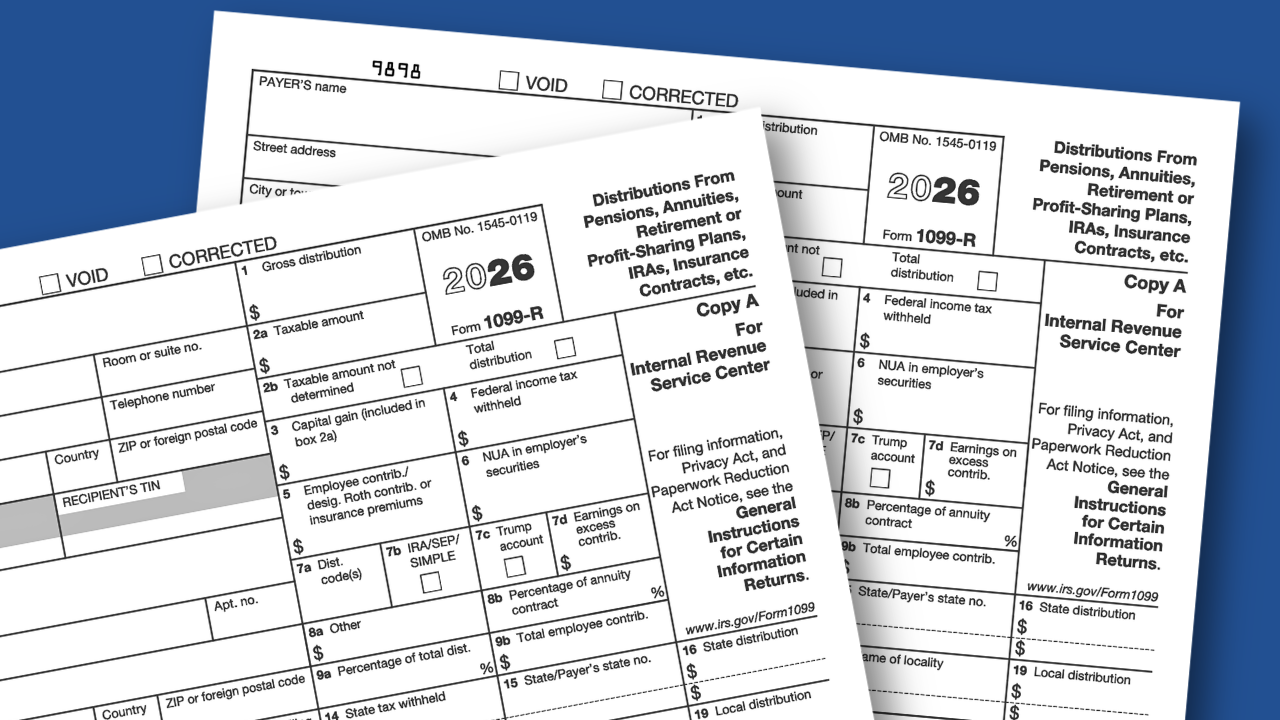
Form 1099-R Distribution Codes, Boxes, and E-Filing: Complete Guide for 2026
Changes to Form 1099-R in 2026: Distribution Code Y, New Reporting Boxes, and IRIS The 2026 Form 1099-R introduces the most significant structural changes to the form in years: Code Y for Qualified Charitable Distributions remains optional for a second consecutive year, the distribution code field has been renumbered to box 7a alongside three new…
-

What Is Intelligent Document Capture? Definition, Capabilities, and Key Differences from OCR
Organizations that process documents at volume spend significant staff time on work that produces no output: sorting incoming mail, keying data from paper into systems, correcting entry errors after the fact. Intelligent document capture (also referred to as automated document capture) eliminates that work. It uses Optical Character Recognition (OCR), Intelligent Character Recognition (ICR), machine…
-
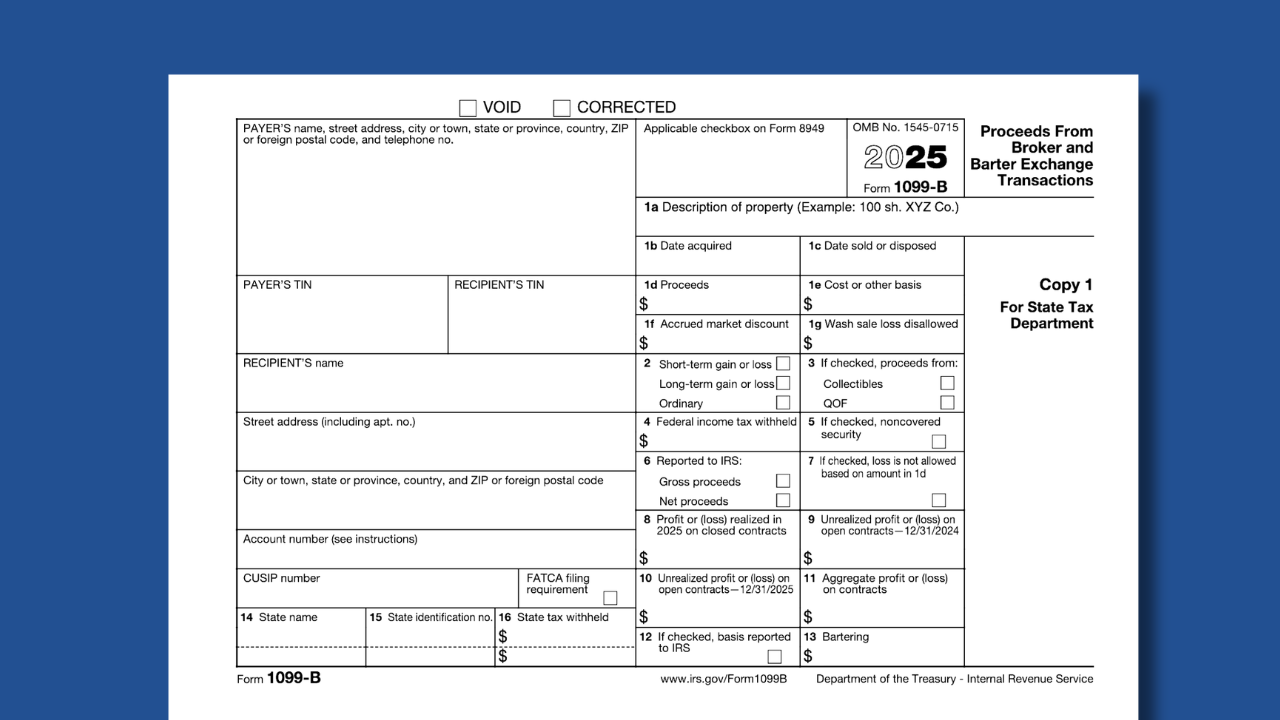
What Is Form 1099-B? Broker and Barter Exchange Reporting Explained
Form 1099-B, Proceeds From Broker and Barter Exchange Transactions, is the IRS information return that brokers and barter exchanges use to report the proceeds from a customer’s securities sales and other reportable transactions, including regulated futures and Section 1256 option contracts handled through a broker. Investors who sold stocks, bonds, mutual funds, options, or other…
-
Key Facts About IRS Form 1099
“Form 1099” is a family of information returns, each covering a different type of payment, with different thresholds, different deadlines, and different rules. Here’s the current picture, current as of the 2026 tax year. Form 1099 Variants Each variant reports a different payment type. For example: Filing the wrong variant for a payment type is…
-
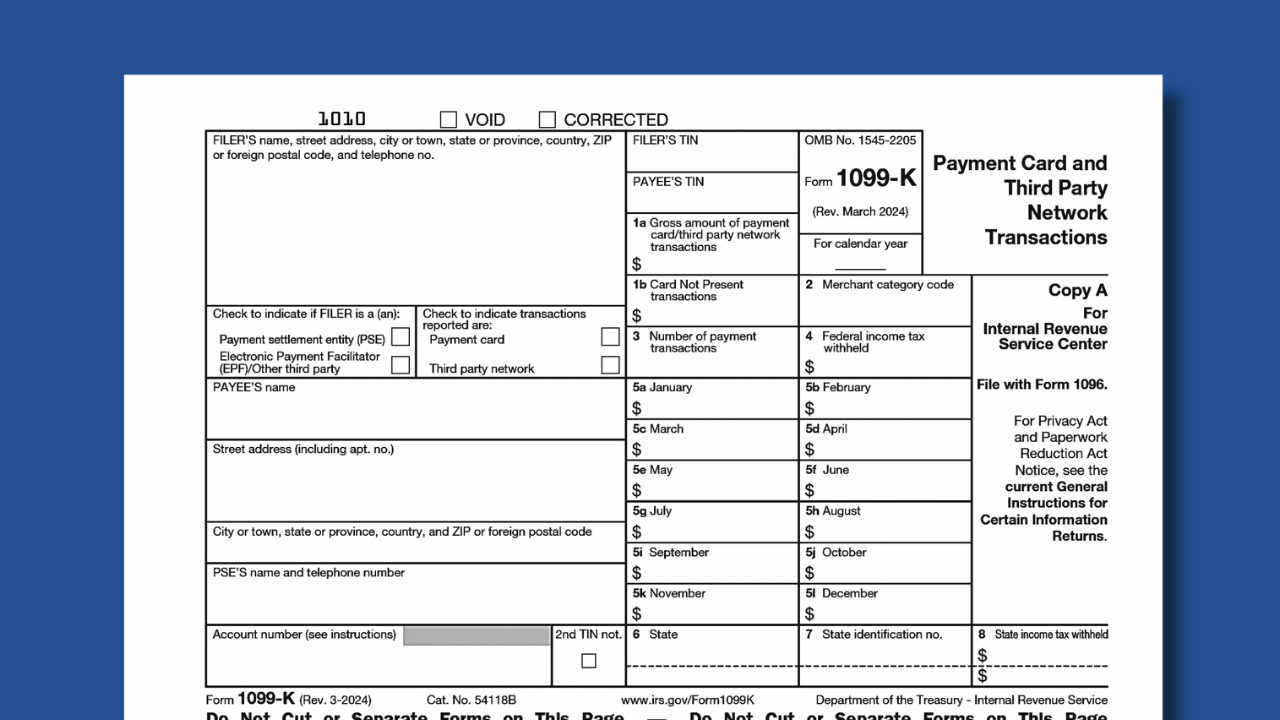
Form 1099-K Reporting Requirements for 2026
If you’ve read that PayPal, Venmo, and similar platforms would begin issuing 1099-Ks for payments over $600 in 2026, that’s no longer accurate. The One Big Beautiful Bill Act (OBBBA), signed July 4, 2025, reinstated the original thresholds: $20,000 and 200 transactions. (IRS — IR-2025-107) This article covers the rules as they stand today. What…


