 1099 Login
-

Bill Printing and Mailing: How It Works, What It Costs, and How to Choose a Provider
What are bill printing and mailing services? Bill printing and mailing services turn your billing data into printed bills and get them into the mail for you. A provider receives your file securely, formats each bill, prints and inserts it, sorts the mail to earn postage discounts, and delivers it to the USPS. Under USPS…
-

Letter, Flat, or Postcard: How Mail Shape Changes What You Pay
USPS prices mail by shape first and weight second. Postcards, letters, and flats (large envelopes) each have their own price table, so a piece’s size, thickness, and flexibility set its postage before it is weighed, and that shape is fixed once the piece is designed. For statements and invoices, the cheapest shape is usually a…
-

Variable Data Printing: How to Personalize High-Volume Mail
Variable data printing (VDP) is digital printing in which text, images and codes change from piece to piece based on a data file, so every piece in a high-volume mailing can carry a different name, offer, image or account detail. Key facts: What is variable data printing? Variable data printing is digital printing driven by…
-

Nonprofit Marketing Mail: Eligibility, Authorization, and Co-Mailing Rules
What are nonprofit postage rates? Nonprofit postage rates (USPS officially calls them Nonprofit USPS Marketing Mail prices) are discounted rates for authorized nonprofit organizations, and they require two things: your organization must be authorized, and each mailing must qualify on its own. Congress created the reduced rates in 1951 and later added limits on what…
-

How to Run a Successful Direct Mail Campaign
This guide is for organizations that have decided to run a direct mail campaign and need to understand how to execute it correctly. Getting these decisions right — in the right order — is what separates campaigns that generate measurable return from those that don’t. It covers list preparation, offer structure, format selection, postage options,…
-

How Check Security Features Work and the Types of Fraud They Prevent
High-security check stock carries multiple distinct security features, each designed to address a different fraud method. No single feature covers all three fraud vectors, which is why high-security stock is built in layers. This post explains how each feature works, which fraud methods it addresses, and which it does not. It also covers how the…
-

What Is Positive Pay and How Does It Help Prevent Check Fraud?
Checks are the payment method most likely to be targeted by fraud. If your organization still issues checks, Positive Pay is one of the most effective tools available to stop a fraudulent check before it ever clears your account. Here’s what Positive Pay is, how it works to help prevent check fraud, what it doesn’t…
-
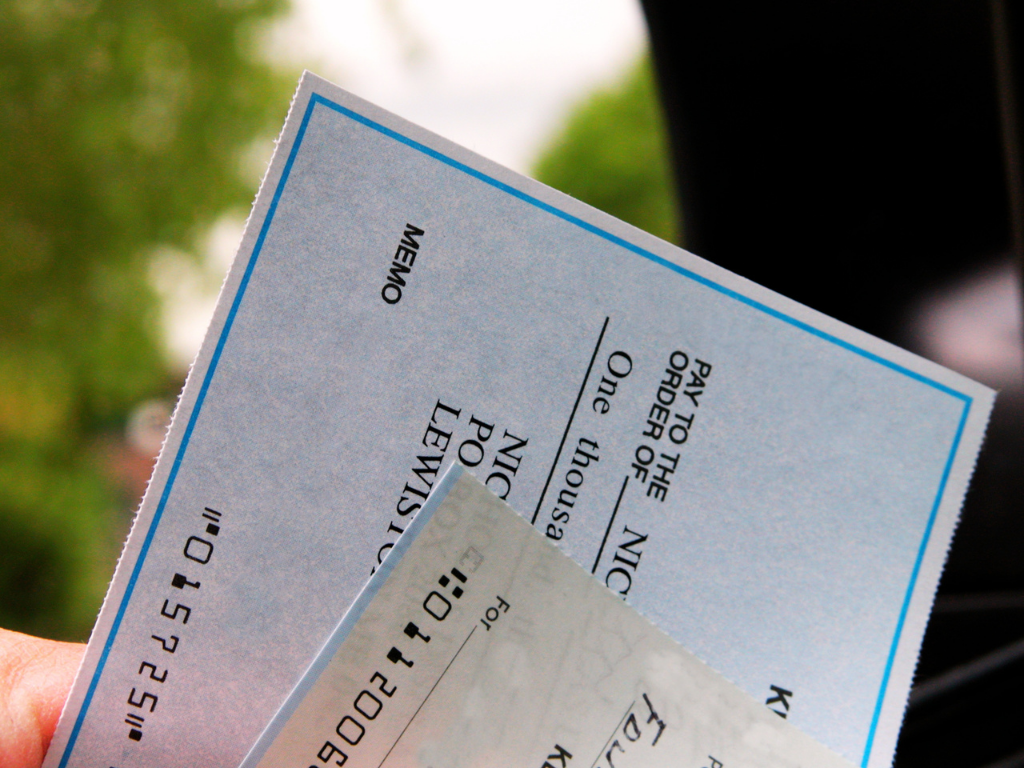
What Is MICR? How Magnetic Ink Character Recognition Works on Checks
If you’ve ever looked at the bottom of a check and wondered what those numbers mean, or why they have to be printed with special ink, you’re not alone. MICR (Magnetic Ink Character Recognition) is one of the most durable standards in American banking. Understanding it matters if your organization prints, mails, or processes checks…
-

In-House vs Outsourced Invoice Mailing: How the Cost Structure Differs
Businesses that mail paper invoices choose between printing and mailing in-house, or using a third-party invoice printing and mailing service. The choice affects staff time, postage cost, error rates, and invoice delivery speed, and the two models spend money in structurally different ways. Labor cost In-house The U.S. Bureau of Labor Statistics reports a median…
-

How to Calculate the True Cost of In-House Statement Printing and Mailing
If you’re evaluating whether to outsource your transactional print and mail, an accurate baseline is the necessary first step. Ask most operations managers what it costs to print and mail their monthly statements and they’ll cite paper, toner, and postage. Staff time, sometimes. But those figures typically leave out a significant share of the actual…
-

Print and Mail Data Security and Compliance: SOC 2, HIPAA, GLBA, and FERPA
Outsourcing transactional print and mail means handing a third party the same sensitive data you’d otherwise protect behind your own walls: protected health information, financial account data, personally identifiable information. Whatever compliance obligations apply to your organization extend to any vendor who touches that data. This post covers what verified, audited print and mail data…
-

The Complete Guide to Outsourcing Transactional Print & Mail
This guide covers what transactional mail outsourcing involves, when it makes financial sense, and what to look for in a provider. What is transactional mail? Transactional mail is the category of physical documents that exist because of a business transaction or legal obligation. Think: What separates transactional mail from direct mail marketing is that it…


